Wear & Tear vs. Tenant Damage: Why the Difference Matters More Than Most Renters Realize
One of the most common questions renters have during move-out is what actually counts as normal wear and tear and what gets considered tenant damage.
At first, the distinction can seem obvious. But once inspections begin and property conditions are reviewed more closely, the line between the two is not always as clear as people expect.
Some residents assume that anything discovered during move-out will automatically be treated as damage. Others believe that if something happened during everyday living, it should automatically fall under normal wear and tear. In reality, most situations fall somewhere in the middle.
Every home changes over time. Floors gradually wear down, walls collect minor marks, paint fades, and appliances age through regular use. Those changes are simply part of living in a property. At the same time, there are situations where the condition of a home goes beyond normal day-to-day living and requires more extensive repairs.
Understanding where that distinction usually exists can help prevent misunderstandings long before move-out ever happens.
Everyday Living Naturally Changes a Home Over Time
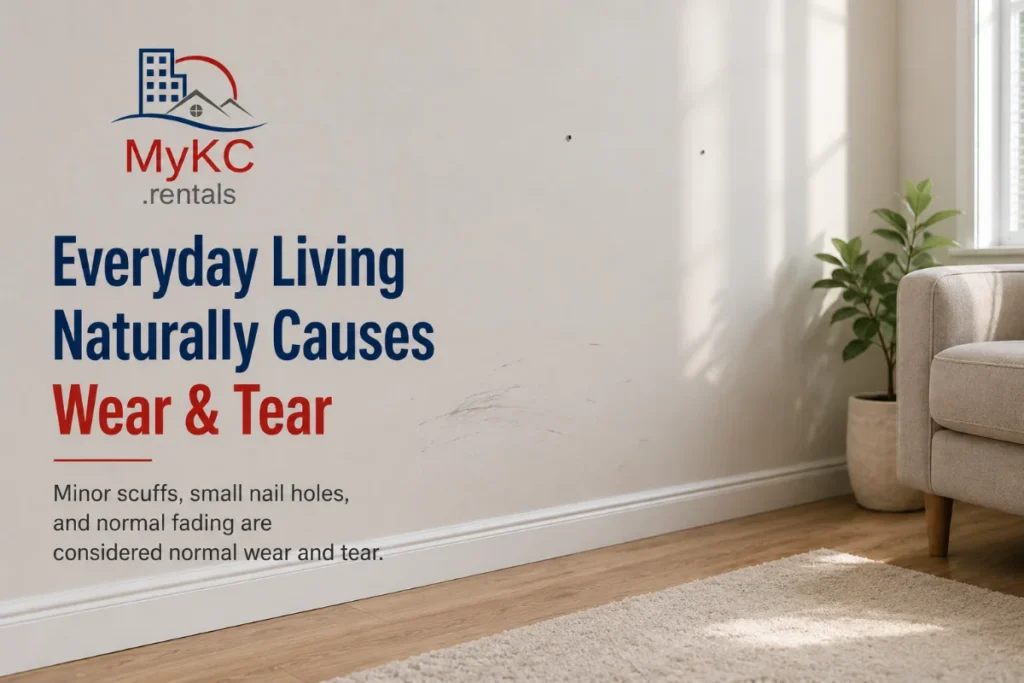
Even when residents take excellent care of a property, daily living still affects the condition of a home over time.
People walk through the same areas every day. Furniture gets moved around occasionally. Cabinet doors and appliances are constantly being opened and closed. Sunlight slowly changes flooring and paint colors. These are all normal parts of occupying a space, which is why some level of wear is expected during a tenancy.
Common examples of normal wear and tear may include:
- Minor scuff marks on walls
- Small nail holes from hanging décor or pictures
- Carpet wear in frequently used areas
- Slight fading of paint, blinds, or flooring
- Loose handles or hardware from regular use
These types of conditions are generally associated with normal everyday living rather than neglect or misuse.
The length of the tenancy also matters. A home occupied for several years will naturally show more signs of use than one occupied for only a few months. That’s one reason move-out evaluations are rarely based on a single issue alone.
When the Condition Starts Going Beyond Normal Use
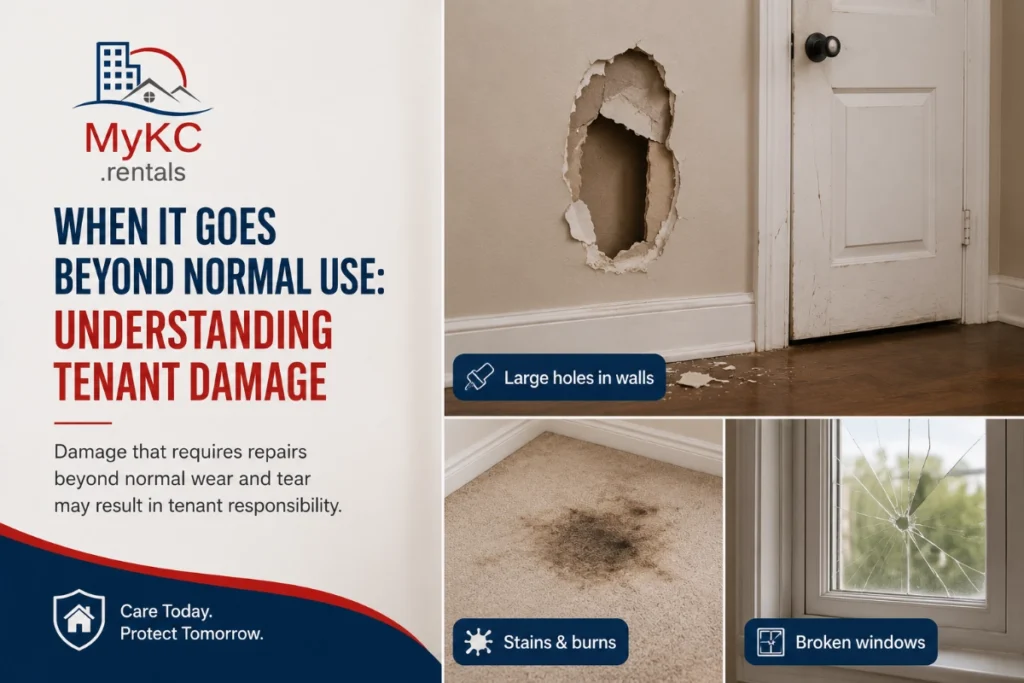
Tenant damage is typically viewed differently because it involves conditions that require repairs beyond standard maintenance or routine turnover work.
In many cases, the biggest factor is whether the issue could reasonably have been prevented with normal care.
For example, there’s a noticeable difference between light wall marks caused by ordinary furniture placement and large holes in drywall. The same applies to flooring. Carpet naturally wears down over time, but heavy staining, burns, or tears are generally treated differently because they go beyond expected day-to-day use.
Other examples of tenant-related damage may include:
- Broken windows or fixtures
- Significant pet-related damage
- Missing property items
- Unauthorized alterations to the home
- Excessive trash or severely neglected cleaning conditions
That said, these situations are not always completely black and white. Two properties may appear to have similar issues while the circumstances behind them are entirely different.
In many cases, residents and property owners are looking at the same issue from very different perspectives. What feels like normal use to one person may look excessive to another. That gray area is often where frustration and confusion begin during move-out.
Why Move-Out Evaluations Sometimes Feel Subjective
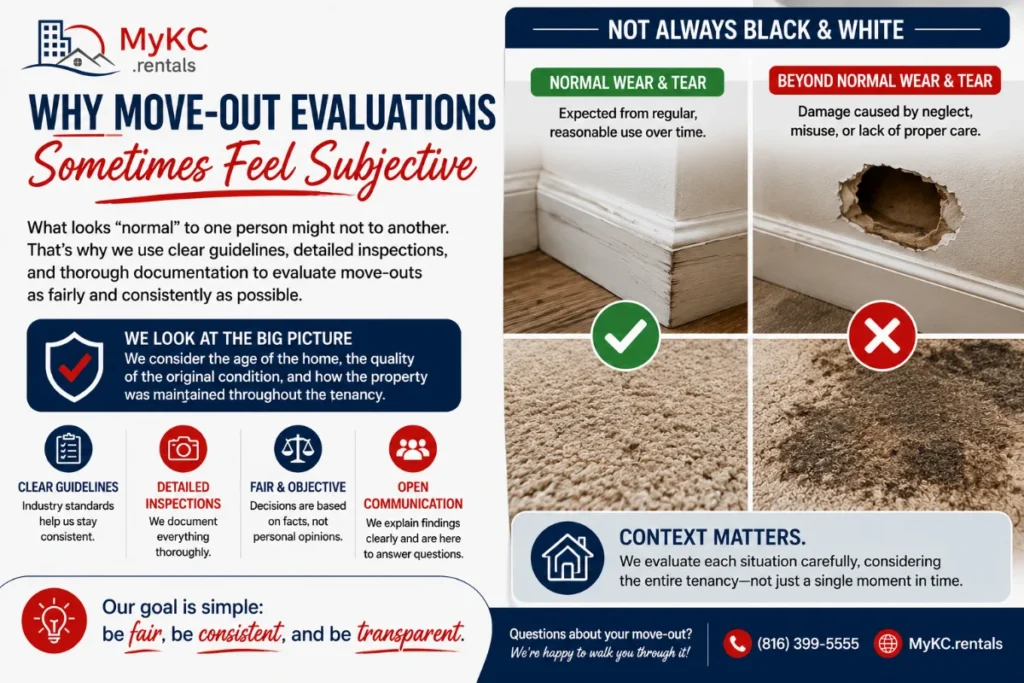
One reason this topic creates so many misunderstandings is because there isn’t always a perfectly defined formula for evaluating property conditions.
The condition of the property before move-in, the length of the tenancy, maintenance history, and the overall severity of the issue can all influence how something is reviewed later on.
For residents, this is one reason why paying attention to the property’s condition throughout the lease can be helpful. Thorough move-in evaluations establish a clearer baseline from the beginning of the tenancy, making it easier to compare the condition of the property over time.
Residents preparing to vacate a property may also benefit from reviewing basic move-out preparation guidance ahead of time.
Having a better understanding of what inspectors are typically reviewing before the final walkthrough takes place can help reduce surprises later on and make the process feel less stressful overall.
Lease Agreements Usually Answer More Questions Than People Expect
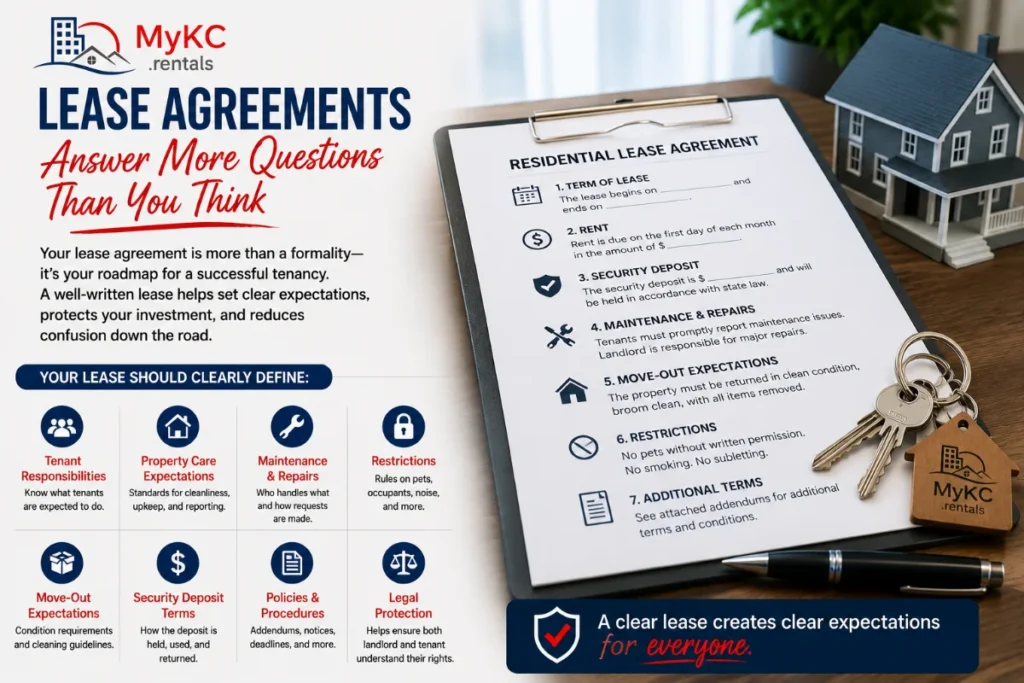
Many renters don’t realize that lease agreements often explain expectations related to property care, cleaning responsibilities, maintenance reporting, and move-out conditions in more detail than they remember.
Reviewing the lease agreement carefully can help clear up misunderstandings before they become larger issues later on.
This is especially important because different properties may have different standards depending on the lease terms, the condition of the home at move-in, and the expectations established throughout the tenancy.
Something that may be considered acceptable in one property may be handled differently in another, which is one reason residents sometimes feel confused during move-out evaluations.
Good Documentation Usually Makes Difficult Conversations Easier
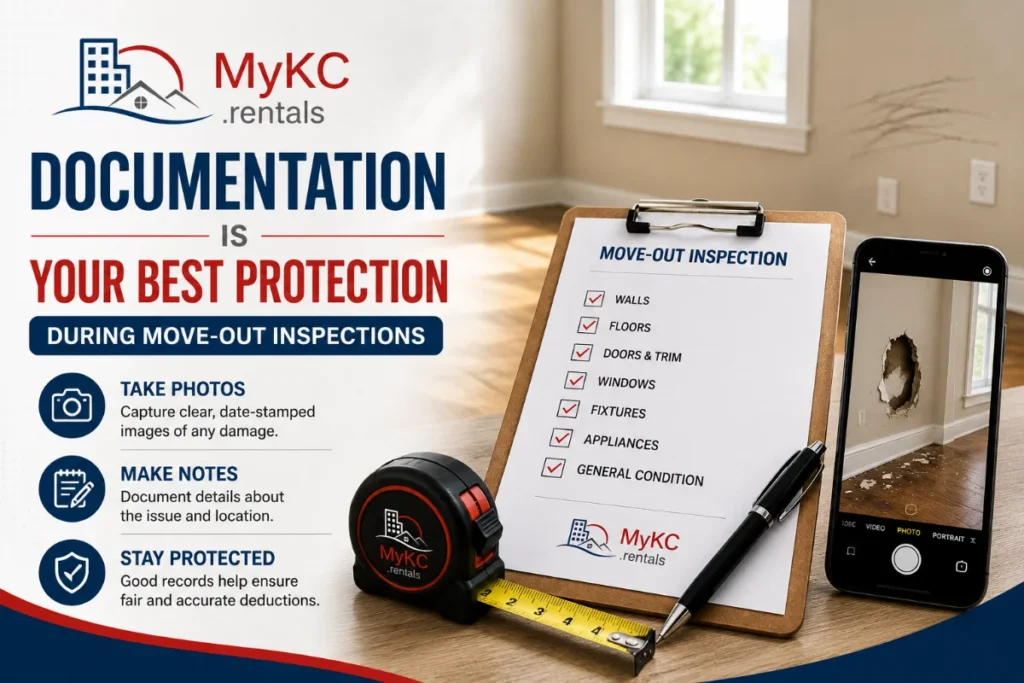
A large percentage of move-out disputes come down to differing memories and expectations rather than intentional wrongdoing. That’s one reason documentation matters so much throughout the lease period.
Photos, inspection notes, maintenance records, and written communication all help create a clearer picture of how the property changed over time. Instead of relying entirely on memory at the end of a lease, documentation provides useful context if questions arise later.
For residents, this also highlights the importance of reporting maintenance concerns early and keeping copies of important communication whenever possible.
Some renters also choose to carry additional protection for unexpected situations during a lease. Learning more about tenant liability insurance can help residents better understand what coverage options may be available in certain situations.
Better Expectations Usually Lead to Smoother Move-Outs

Most move-out frustration doesn’t come from bad intentions. More often, it comes from different assumptions about how property condition is evaluated at the end of a lease.
When residents understand the difference between normal wear and tear and tenant damage ahead of time, the process usually feels far less stressful and much easier to navigate.
Residents looking for additional insight into inspections, communication, and what property owners typically review during move-out can also explore our guide on the move-out process.
Learn More About Renting With MyKC.rentals

Whether you’re preparing for move-in, currently renting, or getting ready for move-out, having the right information ahead of time can make the rental experience feel much less overwhelming.
At MyKC.rentals, we focus on helping residents and property owners better understand the rental process through helpful guidance, clearer expectations, and practical communication from move-in through move-out.
👉 Visit MyKC.rentals to learn more about our rental resources and property management services.